Intel Oregon 2026 FIRST® LEGO® League Challenge Oregon State Championship Tournament

Held January 17, 2026, at Liberty High School in Hillsboro, Oregon

By Linda Barney, Barney and Associates

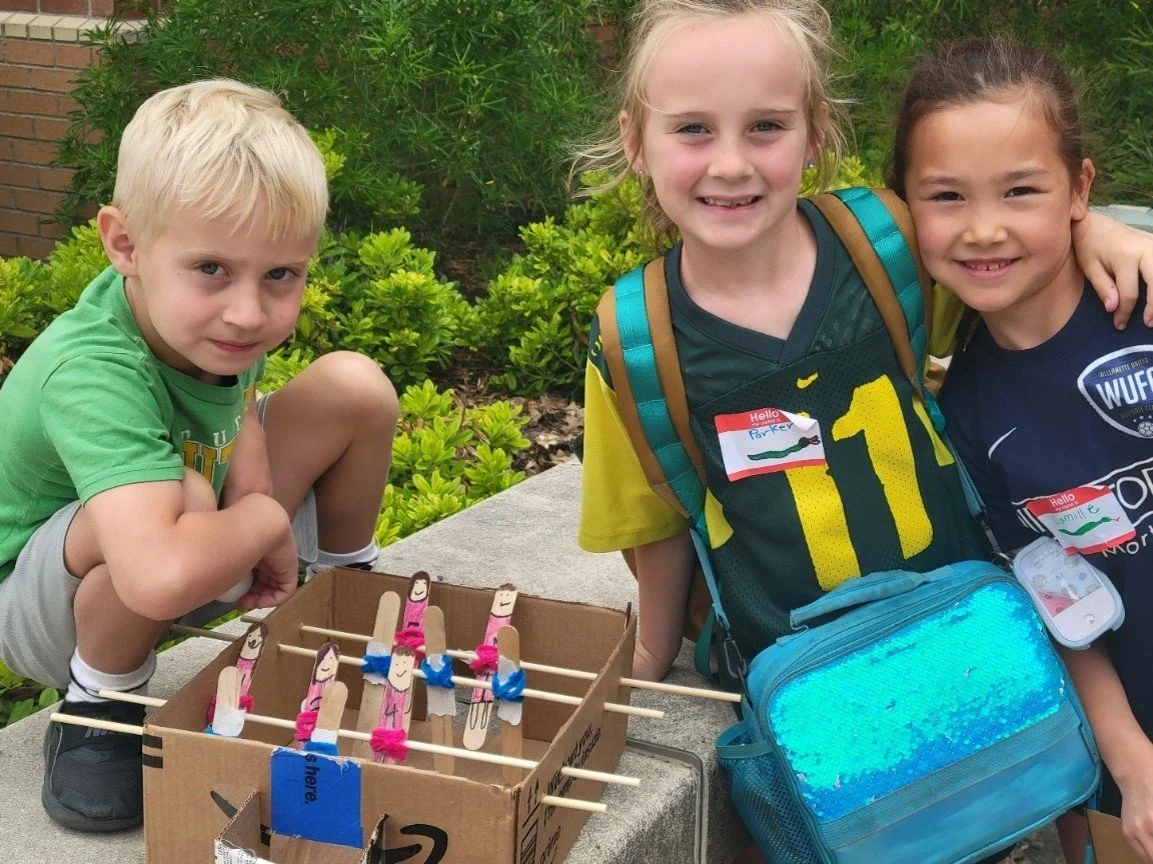
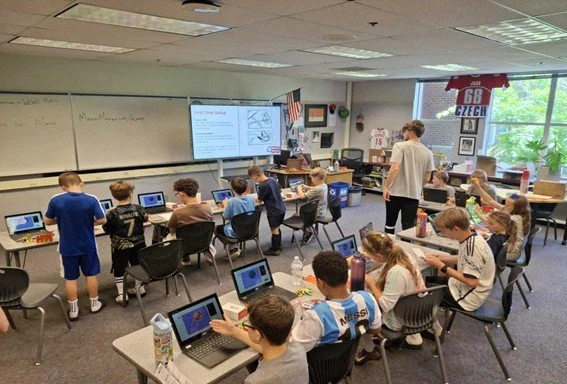
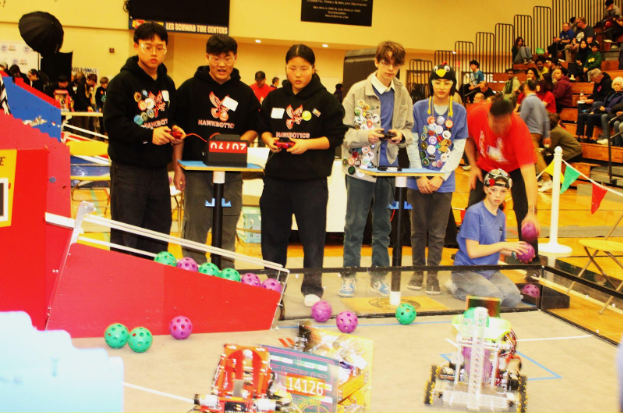
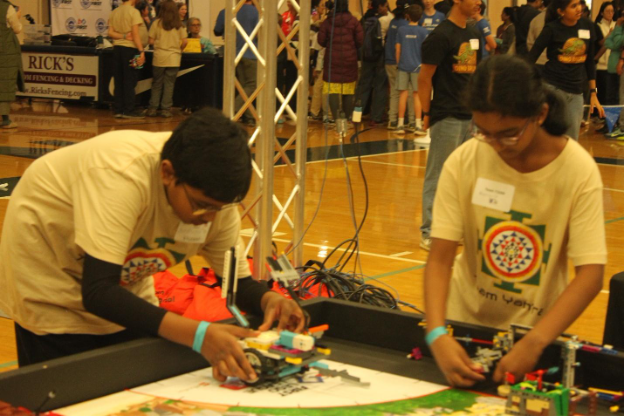
The Oregon Robotics Tournament and Outreach Program (ORTOP) is a premier organization that is part of a global robotics community. ORTOP deploys the FIRST LEGO League Challenge program and other FIRST® (For Inspiration and Recognition of Science and Technology) programs to help students begin exploring science, technology, engineering and mathematics (STEM). The Intel Oregon FIRST LEGO League Challenge Championship Tournament was held at Liberty High School in Hillsboro, Oregon on January 17, 2026.

Each FIRST LEGO team is composed of up to ten students in grades 4 through 8. This year 205 Oregon FLL teams participated, competing at 15 qualifying tournaments across Oregon. The top 60 teams were invited to the championship held on January 17, 2026. This year’s FIRST LEGO League theme is UNEARTHED. Starting in September, each team chose a particular issue relating to archeology, researched that issue and developed a presentation on how that issue should be addressed. They also designed, built, and programmed a unique robot that achieves missions on the UNEARTHED playing field. 

Teams that Competed and Winners of the Championship Tournament

A big congratulations to The Lego Krafters from Portland, who are winners of the championship tournament. They will be advancing to the global 2026 FIRST LEGO League World Festival to be held in Houston, Texas on April 29 to May 2, 2026.

Click here and click on the Radio button next to Registered Teams to see a list of all the great teams that competed in the tournament. Click here for a list of awards given at the closing ceremony of the tournament.

Criteria for FIRST LEGO League Competitions

The FIRST LEGO League program is about more than teaching students programming and robotics skills. Core values of the program teach the young student “coopertition” meaning that learning is more important than competition. FIRST LEGO team members are judged on the following during competitions: 


FIRST Core Values: Teams are encouraged to show good sportsmanship, teamwork, respect for others, and community involvement. 

Innovation: For the 2025-2026 competition, teams were required to research a real problem archeologists face and use design skills to propose that meets criteria of this theme. The team is judged on innovation of their solution and their presentation in describing their project.  

Robot Design and Robot Game: Teams must work together to design a LEGO robot with unique attachments and code to complete missions in the competition robot game. Teams race against the clock using the robot they designed to complete as many game missions as possible in each 2-1/2-minute game match.

Introducing ORTOP

“We believe that all students have the potential to be a scientist, technologist, engineer, leader, and innovator. ORTOP is committed to removing financial barriers for students and communities who have been historically excluded from STEM educational and career opportunities. We provide financial support to underserved and marginalized communities and collaborate with culturally-responsive community partners and volunteers,” states Bruce Schafer, Executive Director of ORTOP/FIRST Oregon. 


ORTOP is the delivery partner in Oregon for a variety of FIRST robotics programs. Click here to see information about ORTOP FIRST LEGO League, FIRST Tech Challenge, and FIRST Robotics Competition programs for students in grades 2 through grade 12.  


Support ORTOP through Donations or Volunteering

ORTOP collaborates with volunteers and works alongside coaches and mentors who assist the organization with events attended by hundreds of spectators. ORTOP needs a variety of volunteers to help with tournaments, see the Volunteer information page for information about ORTOP volunteer roles. To donate to ORTOP or suggest a person or organization who might be interested in becoming a donor or sponsor, see the Support page.

TechStart is Proud To Be Involved as ORTOP Volunteers

TechStart powers K-12 computer science education in Oregon. TechStart provides Teacher of the Year annual awards to K-12 computer science teachers who are awarded $1,000 to use for tech education materials to spend in their classrooms on hardware, software, services, or curriculum. TechStart provides Student of the Year awards to both a young man and young woman high school junior or senior. In addition to awards, TechStart members volunteer as trainers, judges, and assist in organizing ORTOP events as well as working with a variety of other K-12 computer science and technology organizations. According to Peter Steinfeld, TechStart Executive Director, “ORTOP's robotics programs reach more kids than any other tech education program in the state. They teach kids programming, mechanics, research, and teamwork. TechStart is a proud supporter of ORTOP.”

TechStart Provides 2026 Cash Awards for K-12 Technology Teachers and Students

Linda Barney, Barney and Associates

TechStart believes in the importance of K-12 tech education and provides cash awards to both K-12 technology teachers and students in Oregon and SW Washington including areas from Vancouver, Camas, and up to Longview Washington. 

K-12 Technology Teacher of the Year Cash Awards

Please help recognize great K-12 tech teachers who work in a private or public school in Oregon or SW Washington. TechStart annually awards three outstanding K-12 Oregon and SW Washington teachers with a cash award of $1,000 for their classroom to spend on tech education materials including hardware, software, services, or curriculum. If you know a tech educator who deserves recognition, please nominate them. TechStart will be honoring three tech teachers with Technology Teacher of the Year Awards (TOTY), to be presented at the 42nd Annual Technology Association of Oregon (TAO) Oregon Technology Awards:

  • K-8 Technology Teacher of the Year

  • High School Technology Teacher of the Year

  • Technology Teacher Rising Star – Any Grade Level (K-12)

Get involved today by nominating a tech teacher (including yourself) for this cash award. Click here to see criteria you should consider to nominate a great teacher. Once a teacher is nominated, they complete a more detailed Application Form. Click here to access the form to nominate a deserving teacher.

Computer Science Student of the Year Cash Awards: 

TechStart provides a computer science Student of the Year award to high school juniors and seniors. A $2,000 scholarship is awarded to a young man or young woman that can be applied to educational expenses and associated costs. We encourage teachers to nominate a student for this award. Click here to access the form to nominate a deserving student for the award. Once nominated, the student completes a more detailed application form.

TechStart 2026 Nomination and Award Schedule

January 14: Nominations are open for Teacher of the Year and Student of the Year nominations

March 14: Close nominations for students and teachers

April 1: Close application process for students 

April 8: Close application process for teachers to recommend students and for teachers to apply after being nominated

April 18: Select and notify winners and invite them to the TAO awards

May 5, 2026: Present awards at the TAO Tech Awards event

Support for Oregon Statewide Plan for Computer Science Education in 2026

Pete Steinfeld, Executive Director, TechStart

In December, 2023, at the instigation of Governor Kate Brown, Oregon adopted a Plan for Computer Science Education because Governor Brown thought that technology education was critical to Oregon's future.

Here we are, two years down the road, and we've made little measurable progress towards implementing the plan.  We've lost the one full-time computer science position at the Oregon Department of Education, and, in the recent legislative session, the Joint Ways and Means Committee declined to give any funding at all to the implementation of the plan.  At the same time, because of the declining student population, every school district is making budget cuts to protect themselves as best they can.

One result of the current reality is that, in the face of budget cuts, with no incentive to promote statewide computer science education, we’re actually laying off computer science teachers.

This situation has two effects:

  1. First, statewide initiatives will languish since individual school districts have little to no incentive to implement them.

  2. Second, students at schools that are smaller, rural, and have students with lower socio-economic status are missing out on the opportunities that are available to students at the large high schools near Oregon's high high-tech hubs.

If we really think that technology education is important to Oregon's future, we should make policy changes that will:

  • Fund training in computer science and artificial intelligence for existing teachers.

  • Incentivize school districts to reward and retain existing computer science teachers.

  • Incentivize school districts to take steps towards the goals of the Oregon Plan for Computer Science Education.

Pete Steinfeld
Executive Director
TechStart

State of AI and Computer Science Education in Oregon Moving into 2026

Peter Steinfeld, Executive Director, TechStart

Recently, Code.org released its report on the 2025 State of AI & Computer Science Education. This includes both a nationwide summary and a report specific to the state of computer science education in Oregon.  Both reports focus on high school education.  And, for the first time, the reports have data on education in artificial intelligence. Here are the highlights from Oregon's report.

Who's taking computer science

6.1% of Oregon's kids took a computer science course in high school.  According to a study at the University of Maryland, this means that these kids will earn an 8% income bonus on average, regardless of their eventual career path. 

This 6.1% number puts Oregon in 16th place from the top for all the states.  On the other hand, Oregon is in 17th place from the bottom in the number of high schools that offer any computer science courses.  These numbers reflect two realities.  

  • First, Oregon has a shortage of teachers who know how to teach computer science.  Our state has no budget for training teachers in computer science, and Oregon's university system that trains teachers has no special support for creating computer science teachers.

  • Second, Oregon has many small high schools that don't offer computer science courses.  Computer science is an elective, and there's no requirement for schools to offer it or for students to take it.  This means that students who live in rural areas don't have the opportunity to take computer science.

Of the students who do take a computer science course, only 21% of these students are young women.  Contrast this with South Carolina, the top state in this category, where 47% of the students taking a CS course are young women.  This implies that one way to increase our numbers is to simply encourage girls to take a computer science course. 

State policies

Code.org lists 10 policies that drive access and participation in computer science education.  Oregon ranks near the bottom of all 50 states in implementing these policies.  Oregon is hamstrung because we insist on local control of many of these policies.  For example, each school district specifies the graduation requirements for high schools in that district.

There's more bad news.  The Oregon Department of Education recently lost funding for the position of someone to lead computer science education in Oregon.  Also, in the latest legislative session, the Oregon Joint Ways and Means Committee declined to fund Senate Bill 541, which would have provided partial funding for Oregon's Plan for Computer Science Education.  Also, Oregon has no standards for computer science education, no funding, no teacher certification, no high school graduation requirement, no requirement for high schools to offer computer science courses, and no requirement for admission to state universities.


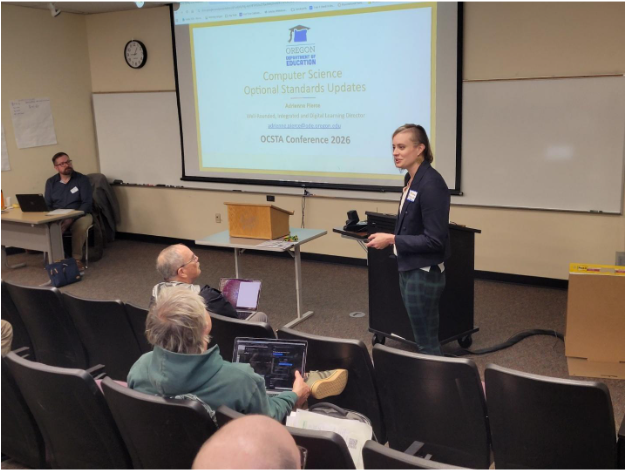
On the bright side, Oregon does have a plan for computer science education, and the Oregon Department of Education is actively working on creating optional standards for computer science education, and these standards include provisions for artificial intelligence.

Call to action

The best thing we can do is to create more computer science teachers and support the ones that we have.  To support computer science teachers, please donate to TechStart.  TechStart recognizes and rewards our best computer science teachers and students.  TechStart also provides funding for the Oregon Computer Science Teachers Association to conduct teacher training three times a year.

We can also support the programs that offer after school programs that excel in providing technical education.  Both my wife and I volunteer for the Oregon Game Project Challenge (OGPC) and the Oregon Robotics Tournament and Outreach Program (ORTOP).  Another great organization is Saturday Academy.

Please consider volunteering for or contributing to OGPC and ORTOP.  Both of these programs offer team and project-based opportunities for students to learn how to work in technology.  ORTOP's state tournament is coming up on Saturday, January 17th, 2026, and they'll need many volunteers.  OGPC's main event will be on May 9th, 2026, and they'll also need volunteers.

Support K-12 Computer Science Education in Oregon with a TechStart Donation

By Linda Barney, Barney and Associates


Businesses increasingly require workers with technology, computer science, artificial intelligence (AI) and math skills to meet future workplace needs. Unfortunately, Oregon schools and educators face funding problems which make it difficult to provide computer science and AI education for Oregon’s K-12 students.


TechStart Powers Computer Science Education in Oregon

TechStart is a non-profit organization in Oregon that supports K-12 computer science education. According to TechStart Chair of the Board John Tortorici, “TechStart’s bold goal is to see that every Oregon K-12 student has access to high-quality computer science education.” TechStart reaches this goal through:

TechStart K-12 Computer Science Technology Student and Teacher of the Year Award 

TechStart provides annual awards to K-12 computer science teachers and a computer science student of the year award to a high school boy and girl.

  • Teacher of the Year Awards: TechStart annually awards three outstanding K-12 Oregon and SW Washington teachers with a cash award of $1,000 for their classroom to spend on tech education materials including hardware, software, services, or curriculum. 

  • Student of the Year Awards: TechStart recognizes a Student of the Year among high school juniors and seniors. A $2,000 scholarship is awarded to a boy and girl winner that can be applied to educational expenses and associated costs.

Help Support Computer Science K-12 Education with a TechStart Donation

Peter Steinfeld, TechStart Executive Director states, “TechStart funds critically needed computer science education programs in Oregon, such as the Technology Teacher and Student of the Year Awards. Please help TechStart lay the foundation of Oregon’s future through a tax-deductible donation. You can make an electronic donation by completing a TechStart Donation form or, if a check is preferred, they can be mailed to:
TechStart
13500 SW Pacific Highway, Suite 121
Tigard, Oregon 97223. 

Oregon Computer Science Education Week 2025

Randy McDonald and Linda Barney


Computer Science Education Week (CSEdWeek) is an annual call to action to inspire K12 students to learn computer science, advocate for equity, and celebrate the contributions of students, teachers, and partners to the field of computer science. This year, along with many other states, Oregon Governor Kotek officially issued a proclamation recognizing December 8 - 14 as Computer Science Education Week. The Oregon proclamation formally endorses plans by the Oregon Computer Science Teachers Association (OCSTA), TechStart, and the Technology Association of Oregon (TAO) to use this proclamation to promote events such as the Code.org Hour of AI across the state. TechStart Executive Director Peter Steinfeld states, “Computer science pervades our everyday life—from cell phones to shopping to how we learn. Our children need to become adept at technology to succeed. Please join us in celebrating Computer Science Education Week for Oregon.”


History of CSEdWeek

Based on an OCSTA article written by Randy McDonald, “The first CSEdWeek was launched by the Association for Computing Machinery (ACM) on December 6–12, 2009. It was a joint effort led and funded by ACM with the cooperation and deep involvement of CSTA, NCWIT, the National Science Foundation (NSF), the Anita Borg Institute (ABI), the Computing Research Association (CRA), Google, Intel, and Microsoft.

In July of 2013, the Computing in the Core coalition members agreed to allow Code.org to organize that year’s CSEdWeek around a new idea and theme, the “Hour of Code.” Since 2020, CSTA has been coordinating CSEdWeek, and Code.org continues to organize the Hour of Code.


How to Participate in CSEdWeek

We encourage you to check out the national CSEdWeek site for more information, including their hosted events, beginning with the CSEdWeek Official Kickoff Event on December 8. 

OCSTA K-12 Computer Science Teachers Association Fall 2025 Conference

AI: Empowering Educators, Guiding and Equipping Learners

By Linda Barney, Barney and Associates

The Oregon Computer Science Teachers Association (OCSTA) is an organization of teachers training teachers in Oregon since 1985. OCSTA hosts remote and on-site all-day spring and fall SuperQuest conference teacher training courses where K-12 computer science teachers share curricula information on new technologies, coursework examples, and hints on how to engage students. OCSTA held their 2025 Fall Teacher’s Conference on November 1 at the Oregon Tech campus in Wilsonville, Oregon. The onsite conference provided professional development (PD) learning opportunities for teachers in Oregon and southwest Washington teaching K-12 computer science classes. Attendees included teachers, Oregon Department of Education, and organization representatives from across Oregon, and southwest Washington including Vancouver, Longview, and Seattle. 

“OCSTA is pleased with the attendance at this recent fall conference. We hosted over 80 Oregon and Washington educators and STEM professionals, more attendees than any conference since COVID. This is good news in that there is an interest in learning more about high tech teaching and OCSTA is in a position to provide the needed training.” states Terrel Smith, President OCSTA. 


OCSTA Celebrates 40th Anniversary

Forty years ago, four men along with a few others, envisioned creating a community of Oregon educators who could learn from each other in this emerging world of technology. They formed the Computer Science Teachers Association and continued to meet and share experiences and ideas so that no one would be alone in adopting and teaching technology courses/computer science in Oregon. This thought seed grew and expanded and became the Global Computer Science Teachers Association (CSTA) and the original Oregon chapter was renamed the Oregon Computer Science Teachers Association (OCSTA). The Global CSTA now has 64 worldwide chapters, all with the vision of "Teachers teaching teachers."

A video was displayed at the 2025 Fall Conference where Jake Baskin, Executive Director of the Global CSTA congratulated OCSTA for being in existence for 40 years. The four OCSTA founders were honored at the OCSTA 2025 Fall Conference with awards. “You are visionaries, pioneers, and explorers, leading the way for all of us to follow the pathway you laid out. Thanks for the exceptional work and happy 40 years!” states Kathy Zettl-Schaffer, Program Director at Teach Engineering Champions Institute and Executive Board Member, OCSTA.

OCSTA founders from left to right: Don Domes, Terrel Smith, Brent Wilson, and Don Kirkwood.

Oregon Department of Education (ODE) Standards and Computer Science Plan

In this session, Jeffrey Rhoades, an ODE Arts, Information Communication Technology Education Specialist, presented information on the ODE statewide K-12 computer science implementation plans. As stated in the December 2023 long-term Computer Science Education Implementation Plan, the Oregon Governor directed the Oregon Department of Education (ODE) in collaboration with the Oregon Higher Education Coordinating Commission (HECC) to develop a statewide, long-term implementation plan to provide access to comprehensive computer science education opportunities to every public-school student in this state by the 2027-2028 school year. 

Part of the plan includes the development of optional K-12 computer science standards to be released in 2026. Any person is invited to participate as a volunteer in the public review of the draft standards. The review will begin in Fall 2025. Those interested in participating in the review process can sign up through an online form which can be accessed at this website. There will also be a short and optional real-time virtual session for those who would like additional clarification of the review process.

ODE Artificial Intelligence Training Modules

The Oregon Department of Education tasked the Willamette Education Service District with producing a primer on Artificial Intelligence aimed at school district staff. The primer consists of eight modules, which can be experienced in sequence or individually, on a subject connecting Artificial Intelligence to education in Oregon. Each of these eight modules are designed to be taught in sixty-to-ninety-minute professional development blocks by a presenter. Additionally, each module contains an AI generated video guiding viewers through the session’s topic. Jacob Niebergall, along with eight other educators from across the state, had the opportunity to help edit and guide the final draft of the modules. ODE will publish these for districts to access within the next quarter. 

Using AI in K-12 Computer Science Education Sessions

There are more questions than answers regarding what and how educators should teach AI in K-12 computer science classes when facing the AI future. Various sessions focused on the latest and most effective ways to harness AI for specific applications including how educators can work smarter, not harder, by using AI tools tailored to classroom needs. The What/HOW should we teach in this AI reality session with panelists Bob Eckstein, Cady Geer, Brennan Agranoff, and Brent Wilson examined the actual current curriculum content and the possible changes that could and should be implemented for student success. 

Hands-On AI for Elementary School Students

Jacob Niebergall is a leader in teaching computer science and AI concepts to his elementary school students at Sunset School in Coos Bay, Oregon. He received the TechStart Technology Teacher of the Year for grades K-8 in 2024. He teaches a sixth-grade course which introduces students to Science, Technology, Engineering, Art, and Mathematics (STEAM) including innovative computer science, artificial intelligence (AI), augmented reality (AR), and virtual reality (VR) concepts. He is using a variety of AI tools in his classroom including instruction on how AI tools can be used to create videos. 

One of the tools he uses is the SORA Open AI tool that requires a paid subscription to OpenAI’s OpenGPT tool. The SORA tool can be used to create a video with one prompt. “Open AI, on the vanguard of consumer generative artificial intelligence, updated its video generative AI in October. The program, called SORA 2, offers several new improvements over the first generation. This includes improved physics, a moving watermark, the ability to ‘cameo’ real people into videos, and audio. SORA 2 offers clear pitfalls for misuse but also potential imaginative opportunities for student engagement,” states Niebergall. 

Educational videos created with SORA2 using a single AI prompt.

Lunch Keynote Session: Exploring the Future of AI in the Current and Future Workplace and How to Prepare Students for that Reality

In the lunch keynote, Timon Smith (son of OCSTA President, Terrel Smith) presented the lunch keynote address. Timon https://www.linkedin.com/in/timonsmith/ has extensive experience working with companies such as Apple, MS, AWS and CISCO and has analyzed trends relating to AI. Timon described the phases of AI adoption and how to help prepare K-12 computer science teachers and students for the changing future of AI and how it will affect work trends.

Timon used the 2025 Gartner Hype Cycle™ as a way to envision the cycles of how generative AI will move through various cycles from initial AI innovation trigger (0-2 years), Hype which is in the peak of inflated expectation (2-5 years), Trough of Disillusionment of early adopters (5-10 years), and Tipping Points or Slopes of Enlightenment (10+ years), and finally a Plateau of Productivity. The increased implementation of AI will have a major impact on what students need to learn and how teachers need to prepare students for a future with extensive AI implementation. 

Timon indicates, “Generative AI and agentic AI will be disruptive to how jobs will be shaped at the Hype peak. There is a high chance that the majority of businesses will have adopted AI in the workforce which will affect students graduating in 2034.” 

What students need to focus on to meet the challenges of AI in the evolving job market:

  • Core programming languages – It is important to think beyond coding. Take some time to learn tools such as Python and SQL for data every day. Data is the main source of information for AI, so students need to understand systems and data as well as learn how to access and use data.

  • Math and algorithm skills – Math is the basis for many algorithms, so having a strong math background is important.

  • AI and cloud skills – There is a massive demand for compute capabilities to run the massive amounts of data used for AI analysis and training. The compute cycle for running AI workloads uses huge amounts of power. Students need to understand Amazon Web Services (AWS) as well as other cloud frameworks and mobile skillsets.

  • Soft skills – Teamwork and problem-solving skills are especially important. 95% of employers require problem solving. It is important to develop strong collaborative and communication skills. Change is so fast that adaptability and continuous learning is critical.

What teachers need to focus on to meet student needs in AI in the evolving job market:

It is likely that the future will include job displacement disruption resulting in humans losing jobs to AI and automation advancements. The change may also result in a polarized economy as AI widens inequalities, especially for students with lack of AI and technologies training. What can teachers do to prepare their students for the AI future?

  • Teach AI and technology skills early – Introduce students to AI and technical tools early in their K-12 education. 

  • Prepare students for multiple futures – Students may need to switch to different jobs or industries in the future. They need to have AI skills and be able to pivot with skills needed for jobs. 

  • Develop a responsive curriculum – As AI technologies and job requirements change, provide universal AI tools to help students develop adaptable skills to prepare for changes.

Curriculum & Pedagogy Sessions

These sessions covered the foundations of Science, Technology, Engineering, and Math (STEM) learning, including how technology applications can be commonly practiced in an elementary school curriculum. Teaching K-12 computer science classes are getting harder with many classroom disruptions, student apathy, parent phone calls and increased tracking requirements. In the Burned out? Let's Rethink our Mission session, Terrel Smith challenged K-12 computer science teachers by stating, “We need to remember our mission and work on how to change our student's world without burning out. Teachers' careers need to burn bright, not burn out.” In the interactive session, teachers discussed strategies to prevent burnout. 

Julie Cucuel led two sessions providing computer science curriculum help for K-12 teachers. The Teach Engineering-National Engineering Curriculum session explored computer science lessons and hands-on activities from the TeachEngineering.org curriculum. These free, standards-aligned resources integrate core computer science (CS) concepts with real-world problem solving and engineer design provided by ncwit.org. Discover easy-to-implement materials to bring engaging computer science experiences to the classroom—no prior CS experience needed. The Elementary-STEM Hub Resource Lending session introduced the statewide Oregon STEM Hub Network CS technology and equipment lending as part of regional STEM Lending Libraries.

In the Elementary STEM K-5 session, Brenda Selby described how her team at Sherwood, Oregon is teaching the STEM/high tech curriculum at the elementary level. They are giving a foundation for girls to realize they can do STEM and technology. Some of the tools used in the STEM class includes Dash/Dot, Sphero Indi, Sphero Bolt, Bloxels, Indi Garage, Math Monsters, Mars Rover Lander, Balancing Robot, Magnetic Cars, Ball Launcher, Cardboard Arcade, and Paper Circuit Cars.

Cybersecurity Sessions

Teaching cybersecurity strategies is a critical part of K-12 computer science education. Cybersecurity is a high-demand field, but few high school students have access to cybersecurity training in their school. In the College Board AP Cybersecurity Test Pilot session, Kerry Stern, Regional Director for the College AP Board provided information on an AP Cybersecurity pilot course designed for high school students. In the 2025-26 school year, schools can participate in the pilot course for AP Cybersecurity, with the course launching nationally in 2026-2027. The course will provide foundational concepts and skills students can apply to cybersecurity roles and a range of related career paths. An AP Cybersecurity Exam scheduled for 2027 will assess essential student's cybersecurity technical skills. Students who pass the exam can receive college credit and an AP Cybersecurity Credential.

University of Oregon Cybersecurity Program Supports High School Students

In the Nurturing Inclusive Cybersecurity Education at Oregon High Schools session, Dr. Reza Rejaie, professor and head of the UO Department of Computer Science described several Higher Education Coordinating Commission (HECC)-funded initiatives at the University of Oregon aimed at promoting, supporting, and expanding cybersecurity education in Oregon high schools during the 2025–2026 academic year. The UO Nurturing Inclusive Cybersecurity Education (NICE) program is a state-funded initiative that promotes and supports equitable cybersecurity education in Oregon’s high schools and postsecondary institutions. These initiatives include: 1) a teacher training workshop to prepare educators to offer a cybersecurity course, 2) high school visits by cyber educators and professionals to engage students in hands-on cybersecurity activities, 3) a free summer cyber camp for high school students, and 4) customized campus tours of the University of Oregon. Computer science teachers from high schools across Oregon can attend a UO cybersecurity workshop to learn about the RING curriculum for teaching cybersecurity in high school classrooms. Rejaie encourages teachers to make their students aware of the UO cybersecurity program and summer camps like the UO free cybersecurity UO summer camp designed to spark Oregon high school students’ interest in cybersecurity. 

Game Design, Application Development, and Physical Computing Sessions

Attendees at the OCSTA Fall 2025 Conference learned techniques and tools to teach K-12 students computer science concepts and skills from other teachers.

Strategies to Make CS K-12 Education Fundamental During the Next Oregon Biennium

Andrew Cronk led a discussion about the importance of getting a K-12 computer science curriculum requirements bill approved in the Oregon legislature for 2027 since Oregon SB541 did not pass in 2025. Cronk indicates that a coalition of groups will need to work on specific requirements and be actively involved in pushing for passage of a new bill. 

Career Readiness

Eric Campbell described that in choosing a degree program that it is important for both parents and students to be aware of various degree programs, how much they pay at graduation, and the earning potential later in a career. On his Archerindustries.org website, Campbell created a High-Wage, High-Demand Jobs summary page with information that can be helpful in choosing a college major. 

George Fox University Proposed University Students Mentoring K-12 CS Student

Dr. Brent Wilson, George Fox University Professor of Computer Science & Cybersecurity indicates that high school students often need individual help with CS classes. He points out that individual help with a tutor is a big benefit to student learning. Wilson indicates that George Fox CS University students could be available to OCSTA to function as computer science tutors.

QuizshowEDU™ - Gamify the Classroom

Kiki Prottsman is a well-known educator, author, and equity advocate who operates on social media under KIKIvsIT. Kiki is the creator of The Educator’s Workshop (now run by NCWIT) that is dedicated to bringing fun, play, and hands-on learning into classrooms. Formerly the Director of Education at Microsoft MakeCode, she is also the author of Let’s all Teach Computer Science, Computational Thinking and Coding for Every Student, and My First Coding Book. Her work has helped shape computer science education for students and teachers worldwide.

She developed QuizshowEDU which she envisions as a national traveling quiz show competition designed to make professional K-12 computer science learning development fun for computer science teachers and to help students learn. In QuizshowEDU, two teams compete to answer computer science questions and answers are judged by the audience to earn points. Kiki introduced the game competition at the OCSTA Fall 2025 Conference with the QuizshowEDU stage where Red and Blue teams consisting of conference attendees competed to win by answering questions.

TechStart Supports OCSTA Teachers Training

“TechStart is proud to have been affiliated with, and supported, OCSTA for almost 20 years. Their ongoing efforts to train and support teachers teaching Computer Science is unmatched anyplace. Thanks to Terrel Smith and his team for their dedicated hard work,” states John Tortorici, TechStart Chair of the Board. 

Supporting K-12 Computer Science Education to Meet Future Workforce Needs

By Linda Barney, Barney and Associates

A major goal of education is to provide students with skills they will need for future jobs in an increasingly technical world. In addition, businesses require workers with technology and math skills. A Gallup Math Matters Study survey conducted in May, 2025 with 2,831 workplace managers found that: 

  • Nearly 60% of managers say they plan to hire more individuals with data-science skills.

  • The majority of managers (85%) said they wished their direct reports had one or more additional math skills.

  • 37% of managers identified data science as a specific desired skill for workers.

  • Three in 10 managers said they want workers with skills complementary to data fluency including statistics, software skills and the ability to communicate mathematical ideas, such as making a chart to share data.

The Gallup study showed that virtually all U.S. adults see math as important in their lives. A survey of subjects in the study shows that 29% wished they had learned more math in middle school or high school along with data science (21%), software (20%), programming (20%) and statistics (18%).


Oregon K-12 Computer Science Education Resources

Oregon K-12 schools and educators face funding issues which can make it difficult to provide data science and computer science education since there is no permanent legislative funding for computer science education in Oregon. Specific Oregon pressures include high housing prices, homeless crisis, declining population, and issues with K-12 student performance. 

However, there are many resources (outside the Department of Education courses available) to help educators provide computer and data science education for Oregon K-12 students and many of these resources are free. Resources include non-profit and business organizations offering funding for teachers and students as well as computer science courses and events. 

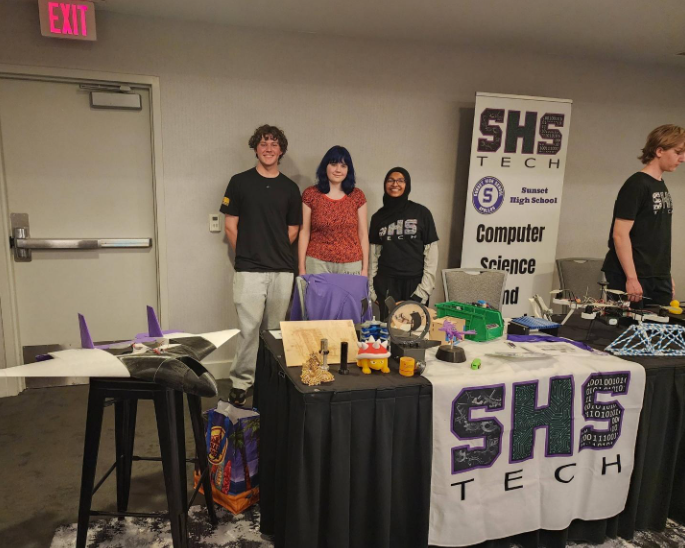
Many dedicated Oregon K-12 teachers also prepare computer science lessons and interactive exercises for students to help prepare them for future work. For example, Jason Galbraith, a beloved computer science and engineering teacher at Sunset High School in Beaverton, Oregon, was named one of Oregon’s 16 Regional Teachers of the Year. Jason provides one-on-one support for his computer science students and was nominated by his students for the award. Jason was also awarded the TechStart High School Teacher of the Year in 2022. He advises the Sunset Girls Code club, organizes summer camps led by high school girls and champions recognition of female students through the National Center for Women & Information Technology’s Aspirations In Computing Award program. “TechStart celebrates Jason and all educators making a difference in K-12 computer science. Your work inspires Oregon’s future tech leaders!,” states Peter Steinfeld, TechStart Executive Director. See the full article about the award written by Ray Pitz at Valley Times


Intel Corporation Provides a Skills Needed for the Future Workforce Program

Intel is a major semiconductor and technology company with a strong presence in Oregon with semiconductor factories and research laboratories located in Oregon. The Intel® Skills for the Future Workforce website identifies areas where educators, administrators, and policy makers can provide activities to help students build skills needed for the modern, tech-driven workplace by integrating technology-based activities into existing curricula and everyday teaching. Intel indicates students will need skills including autonomous robots and drones, distributed systems integration in high-performance computing, Internet of Things, information security, cloud computing and mobility, virtual reality (mixed and augmented), as well as big data and analytics. Here are Intel resources for educators and students.

OregonCSTA Provides Resources for K-12 Computer Science Teachers

Since 1984, the Oregon Computer Science Teachers Association (OregonCSTA) has been providing K-12 computer science resources for teachers. OCSTA hosts multiple remote and on-site all-day spring and fall SuperQuest conference teacher training courses where K-12 computer science teachers share curriculum, information on new technologies, coursework examples, and hints on how to engage students. 

In August 2025, OCSTA hosted a series of remote Professional Development ‘flagship’ events to empower teachers to start the school year off strong. The remote online series was titled the 2025 OCSTA: AI Palooza. The sessions provided educators with an overview of computer science tools, software and how teachers are implementing AI tools in their classrooms. The conference remote classes were open to educators across the US.

According to Terrel Smith, President Elect OCSTA, “The OCSTA fall conference on November 1st is full of relevant and important information, panels and sessions for teachers and educational professionals. The K-12 system needs to respond in a positive way to the changes being made by the recent and future changes in learning and work culture caused by AI. This conference examines the challenge and offers solutions to students and educational professionals.”


TechStart Supports K-12 Computer Science Education in Oregon

TechStart is an Oregon-based non-profit organization created by Oregon technology leaders with the goal of expanding access to computer science education for K-12 students in Oregon. TechStart provides annual awards to K-12 computer science teachers and a computer science student of the year award to a high school boy and girl. TechStart also helps fund OCSTA’s teacher training events. 

TechStart members are also active in volunteering for K-12 computer science training and student events in computer programming, games, LEGO, and advanced robotics competitions. “It has been my pleasure to be involved with TechStart since its inception, as well as all the organizations and events that we support,” states John Tortorici, TechStart Chair of the Board.

Sunset computer science teacher named an Oregon Regional Teacher of the Year

By Ray Pitz, Valley Times - Original Article

A popular Sunset High School computer science and engineering teacher has been named an Oregon Regional Teacher of the Year.

Jason Galbraith was named one of 16 Regional Teachers of the Year as part of the Oregon Department of Education and Oregon Lottery annual competition.

Nominated by two of his students, Galbraith, an 18-year Sunset High veteran, runs what education officials characterize as one of the state’s most dynamic computer science programs.


“His classroom is built on innovation, inclusivity and connection. Galbraith prides himself on empowering students to take risks, learn from failure, and express themselves through creative problem-solving,” said a statement announcing his selection.

Galbraith will not only receive a cash prize but is also entered into the running for Oregon’s 2025-26 Oregon Teacher of the Year, with that winner announced next month.

Over the years he has created hundreds of tutorials and videos allowing students to learn at their own pace.

That gives him time to provide one-on-one support for his students to not only learn how to write computer code but to gain confidence and the ability to tackle difficult challenges in the process, according to education officials.

In addition, Galbraith has “led projects where computer science students design simulations and games to support science, math, and even language arts classes, making abstract concepts more tangible for their peers,” according to the announcement.

Galbraith also advises the Sunset Girls Code club, organizes summer camps led by high school girls and champions recognition of female students through the National Center for Women & Information Technology’s Aspirations In Computing Award program. Sunset often leads the state in honorees in that program.


“I strive to create an environment that celebrates students’ cultural strengths, encourages risk-taking, and empowers them to see themselves as capable problem-solvers,” Galbraith wrote in his nomination statement. “Teaching bravery was not what I expected to be part of computer science as a new teacher, but it has become an essential part of my work.”

Charlene Williams, Oregon Department of Education director, said her department was thrilled to recognize the Regional Teachers of the Year.

“Each recipient embodies the values of innovation, leadership, and inclusivity, and we are proud to honor and learn from their inspiring work,” she said. “These extraordinary teachers remind us that great education transforms lives and strengthens communities.”

Oregon Lottery Director Mike Wells celebrated the winning teachers as well, saying his agency is “proud to celebrate the meaningful impact these educators have on our students and communities.”


2025 OCSTA Summer SuperQuest: AI Palooza

Free, online professional development computer science courses for teachers

By Linda Barney, Barney and Associates

The Oregon Computer Science Teachers Association (OregonCSTA) is an organization of teachers training teachers in Oregon since 1984. OCSTA’s flagship SuperQuest program is a collaborative technology training series designed specifically for K-12 educators teaching computer science (CS) courses. 

The 2025 OCSTA Summer SuperQuest: AI Palooza program includes a variety of free online courses designed to empower educators with the skills and classroom tools to build hands-on technology learning directly into their classrooms or after school activities. “Free and relevant summer Professional Development has been the ‘flagship’ event for OCSTA to empower teachers to start the school year off strong. These sessions, in particular, bring the cutting edge of AI to the frontline teachers to empower their students to use the tools and see a clearer picture of our new AI universe,” states Terrel Smith, President Elect OCSTA.

The sessions count for Professional Development credits and teachers can attend as many as they want. There are 13 two-to-three hour online Zoom Professional Development sessions, all during the day, either at 10 AM or 2 PM during the weeks of 8/4-8/13. Click here to register for sessions. Click here to see more details about each session. 

OCSTA SuperQuest Sessions


AUGUST 4: 

  • 10:00 AMFun Things to Do with AI (K–12)
    Creative AI for teaching, lesson planning, music, and more.

  • 2:00 PMAge-Appropriate AI: Guilt-Free Classroom Use(Grades 2–12)
    Responsible AI strategies, critical thinking prompts, and lessons.

AUGUST 5:

  • 10:00 AMMake Intro CS Count as Math (Grades 9–12)
    Align your CS curriculum to meet Oregon’s math credit standards.

  • 2:00 PMHands-On AI: Google Gemini Gems(K–12)
    Build tailored AI assistants to support student learning.

AUGUST 6:

  • 10:00 AMMy CS Journey (Grades 6–12)
    Insights from a CS educator’s personal and professional path.

  • 2:00 PMThe PD Quizshow!(Grades 4–10)
    Gamified CS learning—fast, fun, and full of classroom-ready content.

AUGUST 7:

  • 10:00 AMAI for Elementary Educators (K–6)
    Discover tools and tips for using AI with younger learners.

  • 2:00 PMInside the Black Box: AI & Energy(Grades 9–12)
    How AI works, its environmental impact, and practical teaching tips.

AUGUST 11:

  • 10:00 AMCAD & Digital Fabrication (Grades 6–12)
    Dive into 3D printing, laser cutting, and student project ideas.

  • 2:00 PMCS+X: Interdisciplinary Integration(K–12)
    Fuse computer science with ELA, STEM, and social studies.

AUGUST 12:

  • 2:00 PMAP Java: Boosting AP Scores(Grades 9–12)
    Proven strategies from an AP CS veteran.

AUGUST 13:

  • 10:00 AMAI: The Good, the Bad, the Ugly (K–12)
    Explore and evaluate ChatGPT, Gemini, NotebookLM & more.

  • 2:00 PMArduino Programming & Circuits(Grades 6–12)
    Teach hands-on coding and hardware integration.

TechStart Supports OCSTA SuperQuest Training

“Tech education is critical to Oregon's future, and the Oregon Computer Science Teachers Association does more to enable tech education than any other organization. TechStart is proud to support OCSTA in their efforts to have teachers training teachers,” states Peter Steinfeld, TechStart Executive Director.

TechStart 2024 Rising Star Teacher of the Year Award Benefits K-12 High School Students in Woodburn, Oregon

Stephanie Partlow and Linda Barney, Barney and Associates

TechStart provides annual awards to K-12 computer science teachers and high school students. Each TechStart Technology Teacher of the Year awardee receives a cash award of $1,000 for their classroom to spend on tech education materials including hardware, software, services, or curriculum. In 2024, Stephanie Partlow received the TechStart Rising Star Technology Teacher of the Year for her computer science program at Woodburn High School in Woodburn, Oregon. Stephanie developed a computer science curriculum for students in an urban setting where many students need to learn English as a second language and have not been introduced to computer science concepts or opportunities. 

“TechStart was proud to give Stephanie this award. Teaching Computer Science at the high school level is important because it fosters problem-solving skills, teamwork, and creativity while making coding exciting and competitive. It challenges students to apply logic and algorithms to real-world problems, enhancing their computational thinking. There is no doubt that we live in a tech-driven world and these students are the future members of our technical workforce who earn six figure salaries. K-12 computer science programs such as the one Stephanie Partlow teaches are important to prepare students for the future,” states John Tortorici, TechStart Chair of the Board.


How Partlow Spent the TechStart Award to Aid Students

By Stephanie Partlow

First off, I want to thank TechStart again for this award. It came at the perfect time when I was just about to officially launch our Computer Science CTE program at Woodburn High School. This award put computer science on the radar of our students, district, and community and my enrollment doubled from around 50 students to about 100 students this year. Students start in Computer Science Intro which is both dual credit for CS160 through the Willamette Promise program and counts as a "plus 1" third- or fourth-year math class towards high school graduation requirements as it incorporates both high school math standards and college discrete math standards. After completing this Intro course, students can choose to take AP Computer Science A, Computer Science Capstone, or Web Page Design. 


I used the TechStart award of $1,000 to purchase a new iPhone 16 pro for my classroom. This year I piloted a Computer Science Capstone course focused on iOS app development with six students. The students had an absolute blast learning Apple's programming language and development tools. They worked with industry professionals to design and test an app and spent all of the second semester developing it. Four of these apps–FeelTrack, MotorBuddy, Style'Lynn, and GoalReach–are now available on the Apple iOS App Store! This year we got two classroom iPhones so students could test their apps. Next year I have over 20 students signed up so I will need more phones! I was able to splurge on an iPhone 16 pro with the TechStart grant that comes with a LiDAR scanner and the ability to take 3D video and photos. I have also been selected to receive an MWEC Project Grant for next year, which will be funded with Perkins V grant dollars (pending final Oregon Department of Education (ODE) approval this summer). The grant will support the purchase of a few Apple Vision Pros—Apple’s virtual reality goggles–and this iPhone 16 pro will enable our students to create 3D content for the Vision Pros as well as to continue to develop and test iOS apps. 

Caption: Woodburn High School student-developed apps (from left to right) FeelTrack, MotorBuddy, Style'Lynn, and GoalReach.

TechStart 2024 Award Benefits K-8 Students in Coos Bay, Oregon

Linda Barney, Barney and Associates

TechStart provides annual awards to three K-12 computer science teachers and a boy and girl high school student. Each TechStart Technology Teacher of the Year receives a cash award of $1,000 for their classroom to spend on tech education materials including hardware, software, services, or curriculum.


In 2024, Jacob Niebergall of Sunset School in Coos Bay, Oregon, received the Technology Teacher of the Year for grades K-8. He teaches a sixth-grade course which introduces students to Science, Technology, Engineering, Art, and Mathematics (STEAM) concepts in an interactive fun way. His curriculum introduces students to innovative computer science, artificial intelligence (AI), augmented reality (AR), and virtual reality (VR) concepts. Students get hands-on experience using tools such as computer aided design, game design, paper circuits, and robots to help them understand the concepts. In addition to his classroom work, Niebergall delivers workshops on using generative AI in education and is active in crafting public policies relating to the use of GenAI. 


The following video shows how Niebergall spent the 2024 cash award to aid his students. He used the funding to purchase equipment such as an Ozobot, cricut device, heat press, a laser cutter, a 3D printer, and 3D spools. “The donation from TechStart has resulted in $10,000 more funding from other organizations based on the legitimacy of the 2024 TechStart award,” states Niebergall.

2025 TECHSTART RISING STAR TECHNOLOGY TEACHER OF THE YEAR

Laura Delaney from Dallas High School named Rising Star Technology Teacher of the Year for high school. 

Laura Delaney teaches 9-12 grade students at Dallas High School in Dallas, Oregon with a student population of 856 students. She is a transformative leader and an extraordinary advocate for technology education at Dallas High School. In just two years, she redefined what is possible for students, establishing a dynamic and accessible Computer Science program that bridges the gap between the classroom and the demands of the technology industry. She helps teachers navigate tools like Canvas and PowerSchool to champion technology practices that enhance learning and operations.

As a member of the district-wide Technology Advisory Committee, she is a tireless advocate for the entire school community. Her wealth of industry knowledge has been the foundation for crafting courses that are not only rigorous but deeply relevant, equipping students with the skills and confidence to thrive in a rapidly evolving digital world.

Click here to see a complete list of the TechStart technology teachers and students who won TechStart 2025 awards. 

2025 TECHSTART TECHNOLOGY TEACHER OF THE YEAR

Steffan Ledgerwood of Liberty High School named Technology Teacher of the Year for high school. 

Steffan Ledgerwood teaches 9-12 grade high school students at Liberty High School in Hillsboro, Oregon with a student population of 1,450 students. Ledgerwood has been a teacher for 25 years and is an advocate for computer science and technology education through his course work and work with youth robotics. Ledgerwood teaches math classes and developed curriculum for several new Engineering and Computer Science Pathway courses based on high school and collegiate models. He works with FIRST Robotics acting as the lead mentor for First Tech Challenge (FTC) and First Robotics Competition (FRC) teams. His AEMBOT FRC robotics team won the Pacific Northwest Championship and finished fourth in their division in international competition. He recently began engaging with Oregon MESA in hopes of connecting more minority students with Engineering and Science, Technology, Engineering, and Math (STEM). 

Click here to see a complete list of the TechStart technology teachers and students who won TechStart 2025 awards.

2025 TECHSTART TECHNOLOGY TEACHER OF THE YEAR

Chris Winikka of Century High School named Technology Teacher of the Year for high school. 

Chris Winikka teaches 9-12 grade high school students at Century High School in Hillsboro, Oregon with a student population of 1,551 students. Winikka has been a teacher for 25 years and is an extraordinary advocate for computer science and a leader in computer science and technology education across Oregon. He teaches various computer science classes which implement the Exploring Computer Science (ECS) curriculum designed to develop students' ability to think critically and solve problems using computational tools and concepts. 

He is past President of the Oregon Computer Science Teachers Association (Oregon CSTA) and also participates in the Portland Area Career Technical Education Consortium (PACTEC). For the past 11 years, he has functioned as the after-school Science, Technology, Engineering, Arts, and Math (STEAM) club coaching clubs including Robotics (FTC), MESA, Software Entrepreneurs Club, Video Game Design, and Makerspace Clubs as well as promoting and supporting other after school STEAM-based programs run by other teachers. His teaching goal is to get more diverse and non-traditional students excited about computer science, who want to learn and use their passion to create and solve problems rather than just being consumers.

Click here to see a complete list of the TechStart technology teachers and students who won TechStart 2025 awards.

2025 TECHSTART GIRL TECHNOLOGY STUDENT OF THE YEAR

Kylin Elliott of Hood River Valley High School named Girl Technology Student of the Year for high school. 

Kylin is a student at Hood River Valley High School with approximately 1,100 students located in Hood River, Oregon. She has outstanding academic accomplishments and completed a variety of Advanced Placement courses. She is also actively involved in Science, Technology, Engineering, and Mathematics (STEM) activities and is a water polo champion at her high school. 

Kylin received student awards including outstanding student in the Rural and Small-Town Recognition Program, and two-time Hood River County School District Engineering Inspiration Award. She participated in First Lego League (FLL) and First FRC programs through First and Oregon Robotics Tournament (ORTOP) Outreach Program for the past eight years. Kylin states, “I served as the FRC Outreach Captain for my team for the last two years, worked with ORTOP to run four separate FIRST Lego League Tournaments for 15-20 teams each at my high school and have volunteered at other tournaments. In the last three years, I have worked with ORTOP and the Colombia Gorge STEM Hub to mentor and fund 34 First Lego League Robotics teams. I helped the STEM Hub with local STEM Fairs in the Columbia River Gorge. I also worked with Oregon State University (OSU) as a Teen STEM Mentor.” Click on this link to see examples of robotics activities and teams where Kylin volunteers. Kylin indicates she is accepted into the Biomedical Engineering program at the California Institute of Technology (Caltech)

Click here to see a complete list of the TechStart technology teachers and students who won TechStart 2025 awards.

2025 TECHSTART BOY TECHNOLOGY STUDENT OF THE YEAR

Edward Lam of Century High School named Boy Technology Student of the Year for high school. 

Lam is a student at Century High School with approximately 1,551 students located in Hillsboro, Oregon. Edward is graduating with a 4.0 grade average and is recognized as an AP Scholar for exceptional performance on multiple AP exams. He has completed various computer science courses at Century High School and is involved in extra-curricular Science, Technology, Engineering, Math (STEM) activities. Edward states, “I designed a web application for real-time tracking of class schedules in my sophomore year. I continued managing it and successfully resolved issues for 1000+ students and teachers, earning widespread recognition for its impact.” He also received the Century Jag Fest Applied Web Design Award for facilitating the installation of NodeJS and NPM on all school devices, opening doors for students to excel further in web design. 

He is a Computer Science Career Pathway leader and stakeholder who promotes the pathway to elementary and middle school students, facilitates new initiatives and helps with career pathway events. Edward is a participant in NW codeORCreate, collaborating in a team to design a web platform using ReactJS and other libraries. He developed a minimalistic, cross-platform Integrated Development Environment (IDE) to simplify programming microcomputing to enhance accessibility for beginners and educators in embedded systems. In addition, he served as an MRI and MRS Data Analyst Intern at Oregon Health & Science University (OHSU) analyzing data from rat brains to support studies on alcoholism that could prevent 178,000 deaths annually. In addition, he volunteers for charity causes and enabled a Unity game solution to combat bullying and promote positive social change. Edward indicates he is accepted at Oregon State University and will be majoring in Electrical and Computer Engineering. 

Click here to see a complete list of the TechStart technology teachers and students who won TechStart 2025 awards. 

George Fox University 2025 High School Programming Contest

By Linda Barney, Barney and Associates

The 2025 High School Programming Contest, sponsored and run by George Fox University's Computer Science & Cybersecurity Programs, was held on April 12 at George Fox University (GFU) in Newberg, Oregon. The contest included an on-site contest at GFU along with a virtual competition held at the same time. The competition programming problem sets were the same whether a team competed on site or virtually. In-person teams only competed against other in-person teams and virtual teams only competed against other virtual teams.

High school programming teams at the George Fox University High School Programming Contest

Why is the Programming Contest Important for High School Students? 

“The high school programming contest is important because it fosters problem-solving skills, teamwork, and creativity while making coding exciting and competitive. It challenges students to apply logic and algorithms to real-world problems, enhancing their computational thinking. Competitions also build confidence, expose students to advanced concepts, and inspire interest in computer science as a possible career path. Students who participate learn to work under pressure, collaborate with peers, and gain recognition for their skills. Additionally, programming contests are also one way to help bridge the gender and diversity gap in tech by encouraging underrepresented groups to engage in programming. Overall, such events nurture future innovators and prepare students for academic and professional success in a tech-driven world,” states Dr. Brent Wilson, George Fox Professor of Computer Science & Cybersecurity, who organized the programming contest.

Why Did GFU Develop and Sponsor the Event?

Wilson indicates that, “The Oregon High School Programming Contest was started in 1986 at Oregon’s Willamette University by a dear friend named Dr. George Struble. Willamette hosted the contest for 30 years. At the time they were looking for a new host location, and with Dr. Struble's blessing, we moved the contest to George Fox University and it has been here for the past 9 years. We have expanded the contest to include beginning students by having three separate divisions based upon a student's skill level. This allows for students that are not Advanced Placement (AP) Computer Science students to also participate.”


Programming Contest Team Divisions

There were 23 on-site teams and 26 virtual teams in the programming competition. A single team includes two or three students. There are three divisions: Division I, II, and III:

Division III: Consists of students who are in the beginning stages of developing their algorithmic problem-solving skills. Division III teams may have competed before but probably only solved a small handful of problems.

Division II: Consists of teams who have been coding for at least a year and may have competed before. They probably would have completed over half of the problems but would have not previously placed 1st, 2nd, or 3rd in a similar division.

Division I: This division is a much harder division. The majority of the competition problems will be similar to programming contest problems at the college/university level. This division is truly for the advanced students who want to challenge themselves and "go for the glory."


TechStart Supports the High School Programming Challenge and K-12 Computer Science Education

“We at TechStart are very proud to have been involved with, and supported the High School Programming Contest, sponsored and run by George Fox University's Computer Science & Cybersecurity Programs. Geoge Fox graduates have leveraged their education for jobs at companies like Amazon, Nike, Boeing, McAfee, Microsoft, Intel, Oracle and more. This competition brought forty-nine high school student teams together both in person and remotely from all over Oregon even including two out of state remote teams, one from Texas and one from North Carolina. They all got first-hand experience on how to understand a problem and then write a computer program to solve the problem. Great experience for all, thank you George Fox,” states John Tortorici, TechStart Chair of the Board.

OCSTA K-12 Computer Science Education Spring 2025 Teachers Conference

Giving Oregon K-12 teachers tools for teaching computer science in the classroom

By Linda Barney, Barney and Associates

The Oregon Computer Science Teachers Association (OregonCSTA) is an organization of teachers training teachers in Oregon since 1984. OCSTA held their 2025 Spring Teacher’s Conference on April 12 at George Fox University in Newberg, Oregon. The conference provided professional development (PD) learning opportunities for teachers in Oregon teaching K-12 computer science classes. 

“The first in-person OCSTA professional development Conference since COVID exceeded our expectations. Brent Wilson, George Fox Professor of Computer Science & Cybersecurity, and George Fox University provided great support and professional development opportunities, and this conference was no exception. In fact, the success of this conference proves that high tech PD is needed and OCSTA is in a great position to provide it,” states Terrel Smith, President Elect OCSTA. 

Brent Wilson delivering the keynote speech at the OCSTA 2025 Conference at George Fox University

OCSTA Conference Sessions

Teachers attending the conference were from large and small school districts throughout Oregon. Conference sessions covered the following topics:

Computer science language and coding, Don Kirkwood: The Python language is used professionally and is also easy to learn for teachers and students. The Introduction to Python class covered introductory Python concepts along with lesson plans. The advanced session focused on sorting algorithms, searching and recursion.

K-5 High-Tech STEM Curriculum, Brenda Selby & Holly Phillips: Explored the foundations of Science, Technology, Engineering, and Math (STEM) learning, including how technology applications can be commonly practiced in a comprehensive K-5 curriculum. The session demonstrated how to implement STEM in both dedicated special education classes and integrated general education classrooms, ideally developing students prepared for further STEM learning in middle and high school.

All Things High School Computer Science Curriculum and “CS Pathways, Jason Galbraith & Cady Geer:

Provided strategies to strengthen Career and Technical Education (CTE) pathways, including structuring new classes and incorporating work-based learning, with examples from local schools.

Exploring Scratch & AI with Face Sensing, Maren Vernon: Scratch is a free, visual programming language used to create interactive stories, games, and animations designed to be easy for beginners, particularly children and young adults, to learn the fundamentals of coding and computer science. The session described the intersection of Scratch and artificial intelligence (AI) through hands-on activities involving face detection and generative AI tools to create interactive projects, games, and stories.

Hands-On AI, Jacob Niebergall: Focused on the latest and most effective ways to harness AI for specific applications including how educators can work smarter, not harder, by using AI tools tailored to classroom needs.

Smarter Learning with AI, Kiki Prottsman: Described how students can utilize AI for brainstorming, validating concepts, and debugging projects—without crossing into “cheating” territory. This session equips educators with classroom-friendly AI strategies that enhance learning and foster problem-solving.

Getting Started with Game Development, Lucas Haley: Provided an overview of major game development engines and tools, discussing their pros and cons, resources available, and potential first projects for high school curriculum.

Level Up Computer Science with MakeCode Arcade, Kiki Prottsman: Provided information on introducing students to retro arcade fun with the Microsoft MakeCode Arcade application. This session covered game design, multi-game kiosks, online multiplayer, and Xbox integration.

Code.org Curriculum and Resources, Lindsay Pierce: Provided an overview of all curriculum options from Code.org, highlighting how its resources can be integrated at all grade levels, including special education. This session covers K-12 options, including Advanced Placement (AP).

Common Sense Education Resources and Options, Lindsay Pierce: Described the Common Sense Education curriculum, AI resources and digital citizenship for all grades to meet social skills, emotional regulation, and executive function of students.

TechStart Supports OCSTA Teachers Training

“OCSTA’s focus on training hundreds of teachers to teach K-12 computer science since 1984 is unprecedented. There is no doubt that they have positively moved the needle for Oregon’s teachers and thousands of students’ careers and continue to do so. The dedicated volunteers who make this happen are truly knights in shining armor. Thank you to all who participate in this worthy endeavor, we look forward to supporting you and to your continued success,” states John Tortorici, TechStart Chair of the Board.

Summary

The conference ended with a Birds of a Feather High School Curriculum and Computer Science Initiative session where teachers discussed the current state of high school computer science. Attendees were able to share how they teach K-12 computer science classes and offer examples along with tips on what has worked in the classroom.


“With the support of TechStart and the National CSTA, OCSTA will continue to provide meaningful and relevant K-12 high tech PD for the foreseeable future. There will be an even greater need for high tech teacher training in the future as the state driven ‘CS Initiative’ is implemented. OCSTA will be including physical computing and engineering training in future conferences to expand the high tech PD opportunities,” states Smith.


Oregon Computer Science Teachers Association Spring Conference Providing K-12 Teacher Computer Science Training Sessions

Terrel Smith, OCSTA President Elect

The Oregon Computer Science Teachers Association (OCSTA) Spring Conference will be held on April 12, 2025 at George Fox University in Newberg, Oregon. This event is sponsored by the national Computer Science Teachers Association (CSTA). The OCSTA Spring Conference provides a day of educational sessions for K-12 computer science teachers that provide information and tools that teachers can use in their classrooms including:

  • K-12 high-tech Science Technology Engineering and Math (STEM), computer science and Advanced Placement (AP) curriculum and resources

  • Classroom ethics

  • Various classes on artificial intelligence (AI)

  • Cyber security

  • Sessions on game development and using various tools, programming languages and applications such as Vernier Sensors, Python, Scratch, and MakeCode Arcade.

Subscribe to the OCSTA newsletter for upcoming announcements and events!

TechStart actively supports K-12 computer science education in Oregon and annually provides cash awards to K-12 computer science teachers and students. TechStart is a sponsor for the OCSTA Spring Conference. “The Oregon Computer Science Teachers Association does more for technical education than any other organization in Oregon. TechStart has worked hand in glove with OCSTA since our inception. We're proud supporters!” states Peter Steinfeld, TechStart Executive Director. 

“TechStart plays a significant role in OCSTA’s mission to increase high tech learning opportunities for all students,” states Smith.

OCSTA: Our History: Who we Are 

The Oregon Computer Science Teachers Association (OregonCSTA) is an organization of teachers training teachers in Oregon since 1984. Our main focus is professional development in the areas of computer science and engineering education for K-12 educators and extended program volunteers.

The Need that no one else fills in CS and Engineering: K-12 Teachers want to meet similar teachers and learn how they make their classrooms successful teaching CS and Engineering curriculum. We bring together K-12 teachers for the entire state and cross beyond the school district lines.

Our Mission and Vision: What we do and Why we do it: The mission of OregonCSTA is to increase the number of Computer Science and engineering programs in Oregon in order to give our students the opportunities for a work and college ready diploma upon graduation. This lofty goal requires partnerships with all who share this mission. The high-tech industry currently reports that there is a plethora of high-paying jobs available to Oregonians, yet only 50% of high schools offer a computer science program to prepare Oregon students to meet this demand. To meet industry expectations, funding resources from industry and government are critical.

Our Programs: How we do it: Our flagship program is SuperQuest, a highly collaborative technology training series designed specifically for K–12 teachers. Our goal is to empower educators with the skills and classroom tools to build hands-on technology learning directly into their classrooms or after school activities. Concepts covered during a SuperQuest workshop include three general tracks: Pedagogy, Programming and Physical Computing. We direct this curriculum for educators teaching K-6, middle school and high school and offer beginner, intermediate and advanced options. SuperQuest is unique from other professional development opportunities because...

  • We don’t just bring you technology for the sake of technology. We focus on technology curriculum that is current and relevant to the changing needs and landscape of the K-12 educator.

  • We don’t hire technology “experts” who haven’t stepped foot in a classroom since they were students. Our instructors are current and experienced educators who have successfully taught our coursework to K-12 students.

  • Our instructors are not just talking heads. We encourage hands-on interaction and in-class discussion about teaching methods, pedagogy, appropriate curriculum materials and classroom management.

  • The learning doesn’t end when your workshop is over. We understand that often the best learning comes from collaboration.      We enhance our training by providing opportunities outside the classroom to share best practices and collaborate with other educators.

We offer additional Professional Development opportunities annually at our Fall and Spring Conferences.

How to become involved:

  1. Make a donation. It costs money to offer statewide professional development.

  2. Join us at a SuperQuest, Fall or Spring Conference.

  3. Contact us at oregoncsta1@gmail.com