
By Linda Barney, Barney and Associates
Nathan Shelley and Sol Joye from the Oregon Department of Education (ODE) introduced the updated ODE Generative Artificial Intelligence (AI) in K-12 Classrooms Guidance program during an Oregon Computer Science Teachers Association (OCSTA) 2026 SuperQuest training session. ODE’s vision is to ensure that every student, every day, is engaged in meaningful, grade-level learning. Although AI policy design remains at the local level, ODE’s AI guidance helps districts consider key factors in supporting local implementation.
Generative Artificial Intelligence (AI) in K-12 Classrooms Guidance:
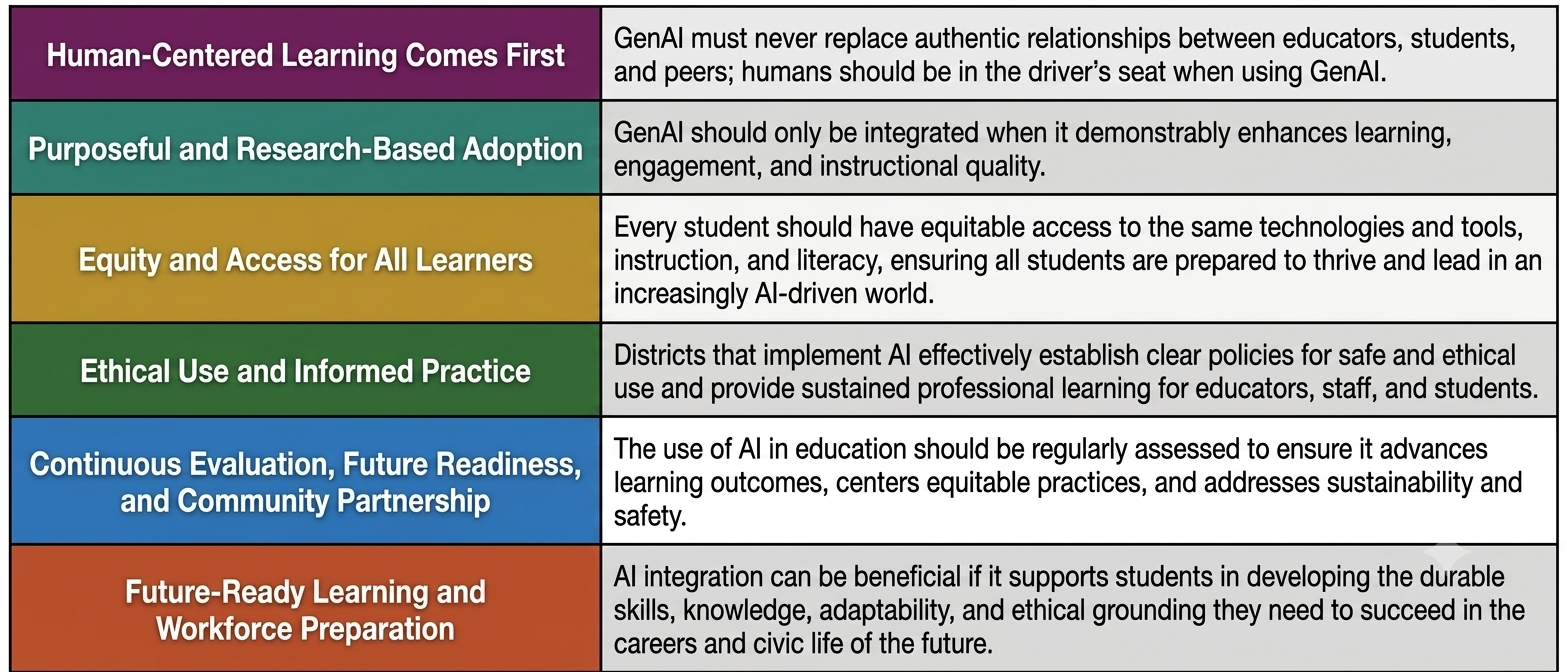
ODE recently updated the Generative Artificial Intelligence (AI) in K-12 Classrooms Guidance with essential information to help Oregon K-12 school districts navigate GenAI, while protecting students and keeping humans in the driver’s seat. The Oregon Department of Education : Generative Artificial Intelligence (AI) in K-12 Classrooms Guidance guidance focuses on six key principles designed to guide AI planning. These principles encourage placing human decision-making and student learning at the center.
ODE GenAI for K-12 Classrooms Guidance Key Principles:
Professional Learning and Classroom Practice
The ODE session included breakout discussions in which participants explored the need for AI-focused professional development and literacy training. Educators discussed topics such as AI prompt quality, AI errors and sycophancy, bias, curriculum alignment, and the importance of establishing consistent expectations across schools. The group recognized that successful implementation depends on helping teachers build confidence and competence with AI tools. Industry participants also discussed how companies might support classroom learning.
Balancing Benefits and Risks
Educators acknowledged both the promise and challenges of GenAI, which can act as a tutor, support personalized learning, and increase educator efficiency. However, concerns remain about academic integrity, inaccurate information, overreliance on technology, and inappropriate use. The discussion emphasized that schools must balance innovation with safeguards that protect learning outcomes and student well-being.
Teaching AI Literacy Through Authentic Learning
Through project-based learning, students gain practical experience while developing the critical thinking skills needed to navigate AI-driven environments. Traditional assessments may not fully capture critical thinking, adaptability, or resilience. The conversation emphasized the need to develop broader measures of student success that reflect both academic achievement and real-world competencies.
Durable Skills for the Future
In the age of increased AI use, students need to learn durable skills. What are durable skills? In general, these have been equated with “soft skills” such as critical thinking, information literacy, resilience, communication, and problem-solving. Portland Public Schools (PPS) created a Portrait of a Graduate framework that guides educators on the skills students need before graduation to be ready for the workforce in the age of AI.
Resources and Implementation Support
The presenters shared a range of ODE Digital Learning and partner implementation resources, including guidance documents, policy-development tools, readiness checklists, and ongoing support opportunities. These robust resources are intended to help school leaders and educators make informed decisions about AI adoption.
Privacy, Safety, and Future Considerations
The question-and-answer session addressed teacher resistance, plagiarism, process writing, AI literacy, privacy requirements, and student data protection. Participants stressed the importance of maintaining strong privacy protections while preparing schools for continued advances in AI technology.
Conclusion
The ODE GenAI session underscored that AI is no longer a future consideration but a present reality for education. Effective implementation requires clear guidance, thoughtful policies, ongoing professional learning, and a commitment to ethical and equitable use. By focusing on AI literacy and durable skills, schools can help students thrive in a rapidly changing technological landscape.