
Peter Steinfeld, TechStart Executive Director
Every year, Oregon sends another graduating class into a world where artificial intelligence, computer science (CS), and basic digital security are no longer optional skills — they are the baseline for participating in the modern economy. And every year, a large share of Oregon's students graduate without ever having had someone to teach them about CS, artificial intelligence (AI), and technology.
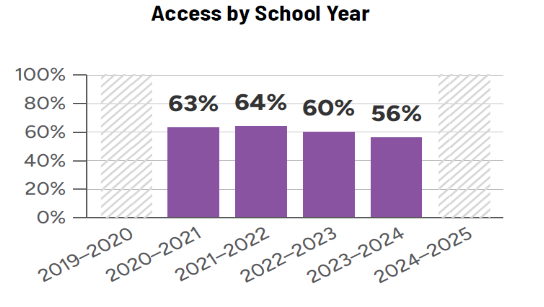
That's not because Oregon's teachers don't want to teach these skills, or because our students aren't capable of learning them. It's because the opportunity simply isn't there. Today, over 40% of Oregon high schools do not offer a computer science course at all — a gap documented in Code.org's State of Computer Science Education report. For tens of thousands of Oregon children, computer science isn't a class they chose to skip. It's a class their school never offered.
An Urgent Skills Gap, and No Budget to Close It
This isn't a niche concern. Artificial intelligence, computer science, cybersecurity, and robotics increasingly touch every career path, not just software jobs — from manufacturing and agriculture to healthcare and the trades. And with Oregon's recent award of the NSF FAST grant, it's more important than ever that we grow talent here in Oregon with the skills and expertise needed to grow our digital future.
Students who leave high school without any exposure to these fields start their working lives, and their further education, already a step behind — conceding ground before they've even had a chance to compete. And the gap isn't evenly distributed. My grandchildren live in Cedar Mill where they will attend Sunset High School, which has one of the best computer science programs in the state. But they’d be left behind if they lived in a rural and under-resourced district, where small schools are the least likely to have a teacher trained to teach computer science.
Oregon has recognized this problem before. In 2023, the Department of Education adopted a statewide Computer Science Education Implementation Plan. In 2025, the Legislature considered Senate Bill 541, which would have required schools to offer computer science instruction. But recognizing a problem and paying to fix it are different things — there is currently no dedicated funding in Oregon's education budget for computer science or AI instruction, and SB 541 stalled without an appropriation to back it up. ODE lacks a funded staff position to lead this work statewide. Districts that want to close this gap on their own are left competing for the same shrinking pool of general-fund dollars as every other priority in Oregon's schools.
A Shrinking Student Population Changes the Math
Here's what makes this moment different from past efforts: Oregon's K-12 enrollment is shrinking, and it's going to keep shrinking for a long time. Statewide enrollment has already dropped by more than 37,000 students since 2020, reversing a decade of growth. Demographers project that Oregon's graduating class sizes will peak this year and then decline every year for roughly the next 15, with the state graduating fewer than 34,000 students annually by 2041.
That's a hard trend for schools to manage — fewer students means fewer dollars and tighter staffing. But it also points directly at the most realistic path forward for digital science education: Oregon isn't going to hire its way out of this gap by adding new computer science teachers to a shrinking system. The far more achievable, far more cost-effective strategy is to invest in the teachers we already have — training our existing K-12 educators to confidently teach AI, computer science, computer security, and robotics within the schools and classrooms that already exist. A math teacher, a science teacher, or an elementary generalist who receives well-designed, well-supported professional development can bring computer science into a classroom that has never had it, without the state needing to create a single new position at the district level.
This is exactly the kind of investment Oregon has successfully made before, on a smaller scale. Between 2018 and 2019, the Oregon Computer Science Teachers Association ran a statewide professional development program that trained over a thousand Oregon teachers in computer science instruction — proof that Oregon's educators are willing, ready, and able to take this on when the state gives them the training and support to do it.
The Missing Piece: A Law That Actually Funds It
Good intentions and pilot programs aren't enough. What Oregon needs now is a law that puts real, dedicated funding behind computer science and AI education — funding two specific things.
First, a dedicated specialist position at the Oregon Department of Education (ODE), so that someone is accountable for coordinating this work statewide instead of computer science education competing for scraps of attention alongside every other ODE priority.
Second, and most importantly, the law should fully fund a statewide professional development program — one that trains existing Oregon teachers to bring AI, computer science, computer security, and robotics into their classrooms. This program should provide real financial incentives, such as stipends and substitute-teacher coverage, so that participating doesn't cost teachers their own time and money.
This law should also require that the training build a coherent path, not a patchwork of one-off lessons. Middle school instruction should give students the skills and knowledge they need to enter a computer science career and technical education program of study in high school, and high school instruction should build the skills and knowledge students need to succeed in a college computer science program. Without that kind of alignment across grades, a student can get a strong AI or coding lesson in eighth grade and then hit a high school with no on-ramp to build on it, or take a single high school computer science course with no path to the college-level coursework that would let it pay off.
This is a deliberately narrow, achievable request. It doesn't mandate that every school suddenly offer a new course — it builds the teacher capacity that has to exist before any mandate could ever work. It targets the students most affected by the current gap, in rural and under-resourced districts. And it does it at the exact moment when training Oregon's existing educators, rather than trying to hire an entirely new specialized workforce for a shrinking system, is not just the right strategy but the only realistic one.
Oregon's students are not going to get more chances to learn these skills by waiting for enrollment to grow, or for the budget picture to get easier. The window to invest in the teachers already standing in front of Oregon's students is open right now. Closing Oregon's computer science and AI gap starts with the Legislature passing a law that funds it.
Sources:
"Computer science has gone mainstream in U.S. education, yet young women are still underrepresented in Oregon", Stacker/KTVZ, February 2025 (analyzing Code.org's State of Computer Science Education report) — 60% of Oregon high schools offer computer science, meaning 40% do not.
"State of AI and Computer Science Education in Oregon Moving into 2026", TechStart — no dedicated state budget for training teachers in computer science; ODE lost funding for the position leading the state's computer science work; SB 541 was not funded.
"Oregon's new normal: Declining public school enrollment", OPB, November 2025 — Oregon public school enrollment down more than 37,000 students since 2020.
"Oregon expects student population to shrink over next 15 years", The Bulletin, June 2026 — Oregon graduation class sizes projected to peak in 2026 and decline annually for roughly 15 years, to fewer than 34,000 graduates by 2041.
Pat Ketcham, Ph.D., "The Oregon Digital Promise 2.0 Report," Oregon Computer Science Teachers Association, September 2019 — 1,048 Oregon teachers trained through the 2018–2019 Digital Literacy 2.0 professional development program.
Oregon Department of Education, Career and Technical Education (CTE) — Oregon's official term for a CTE offering is "program of study"; computing-related coursework currently sits within the broader "Arts, Information and Communications" career area rather than as a standalone computer science program of study.
University of Oregon, First-Year Admission Requirements — general college-preparatory coursework, with math through pre-calculus or calculus recommended for STEM-bound applicants; used as the basis for describing what builds readiness for a college computer science program.